About Me
I'm a final-year MS/BS student at Worcester Polytechnic Institute working at the intersection of machine learning and hardware design. My research focuses on making neural networks faster, more efficient, and deployable on resource-constrained devices, from model compression to neuromorphic computing to hardware acceleration.
What drew me into this field was a realization during my undergraduate years: neural networks are remarkably inefficient, and our hardware isn't optimized for them either. As massive language models captured public attention, I became fascinated with how we can make these systems more efficient through design and implementation (e.g. Lottery Ticket Hypothesis, sparse matrix coprocessors). This led me down paths exploring the pruning, quantization design, and eventually to designing new training paradigms like StoMPP that fundamentally rethink how we approach neural network optimization.
Research Philosophy
I'm driven by elegant solutions grounded in mathematical intuition. When I work on a problem, I want to understand it deeply enough that the solution feels inevitable. My quantization work (StoMPP) emerged from questioning the fundamental assumptions in binary neural network training. My current work on spiking neural networks for FPGAs stems from thinking carefully about event-driven computation and how to map that efficiently to hardware.
I believe the best practical systems come from strong theoretical contributions. By designing algorithms and architectures that are mathematically principled and hardware-aware, we enable better systems for everyone who builds on that work.
On Campus
Beyond research, I'm actively involved in the WPI community. I serve as Treasurer for the Eta Kappa Nu Honors Society and President of the Upsilon Pi Epsilon Honors Society, where we work to support our community and get people excited about electrical and computer engineering (ECE) and computer science (CS). Under my leadership, our UPE chapter received the Outstanding Chapter Award in both 2024 and 2025, a national recognition for top-performing chapters.
I'm also hands-on with hardware through project clubs. As electrical subteam lead for our Autonomous Underwater Vehicle club, I work on propeller control systems, sensor integration, and safety systems, while mentoring 15 members on PCB design and component selection. On the High Powered Rocketry Club's Electronics Design Team, I design PCBs for telemetry, radio communication via XBee, and power systems.
I've also served as a teaching assistant for introductory Electrical Engineering courses, mentoring over 100 students through circuit design fundamentals and even delivering lectures on phasor theory. Teaching reinforces my belief that truly understanding something means being able to explain it clearly.
Outside the Lab
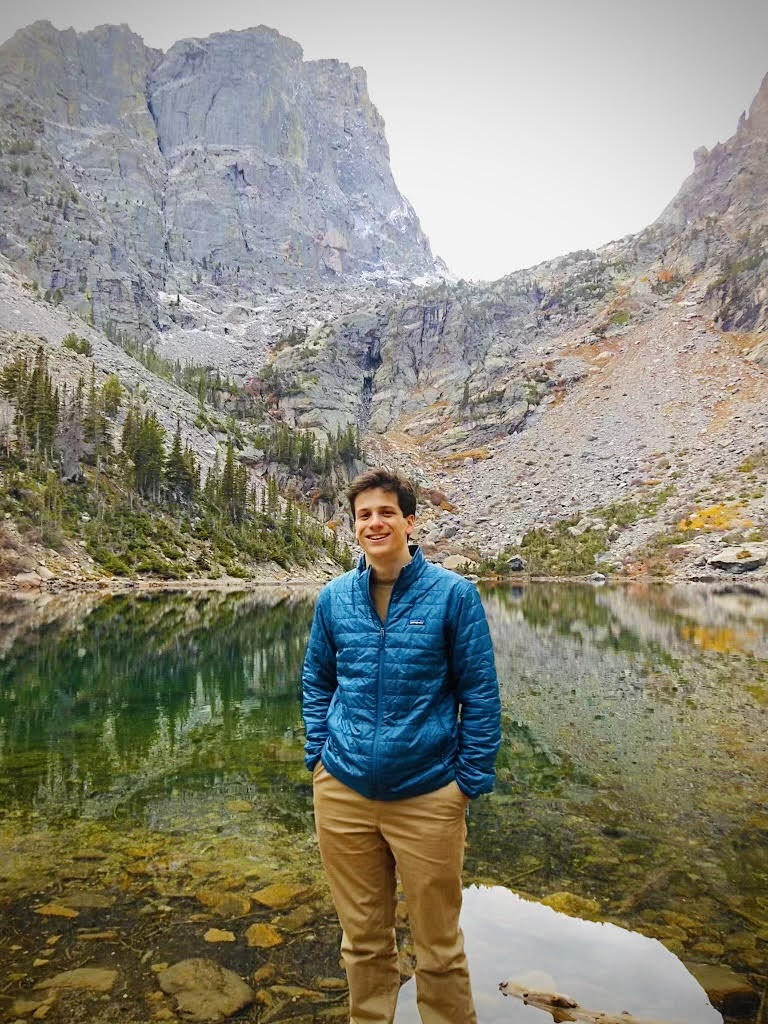
I'm originally from Maine; the banner photo on my homepage is Mount Katahdin from Mount Deasey. I love getting outside for hiking, whitewater kayaking, and canoeing when I can steal time away from research. I also play piano in WPI's Jazz Ensemble.
I have a particular fondness for elegant toy problems and unexpected mathematical results. Beyond my main research, I've worked on a Bananagrams solver, a perfect information Clue solver, and proved that the chalices problem in Jackbox's Trivia Murder Party converges to 1/e as the number of players increases. Basically any game that I lose at a lot, I tend to devote some time to a solver.
Looking Forward
I'm currently applying to PhD programs for Fall 2026, with plans to continue pushing the boundaries of efficient neural network design. I'm particularly interested in research that bridges elegant theoretical contributions with practical hardware implementations—building systems that are both mathematically principled and deployable in the real world.